Pediatric Mental Health and Occupational Therapy

Our Kids and Mental Health

Today’s topic is an important one.

Kids mental health and the role of occupational therapy.

We’ve all noticed the explosion over the last few years in children’s mental health and the need for services.

I feel the need has always been there, just bubbling beneath the surface, but Covid forced us to recognize the importance of addressing this critical issue.

I don’t think there’s any denying kids are suffering.

I’ve found that the help occupational therapy can provide can be overlooked when it comes to mental health.

Occupational therapist’s provide a unique role in helping to support children with mental health needs.

Here are a few ways that occupational therapists can help support children.

A young Asian girl with a grey hat and white jacket
Photo by Ron Lach on Pexels.com
A small boy holding on to an adults leg
Photo by Ron Lach on Pexels.com

-Occupational therapy utilizes a holistic approach. OT’s look at the whole child and can assess how to improve function and independence.

-Occupational therapists can help explore leisure and social activities which are critical for those children with mental health needs.

-Occupational therapists can help with self regulation and sensory processing skills. This includes anxiety, depression and attention.

-Occupational therapists can collaborate with families, schools, and communities to help find ways to support children in their every day environments.

When we are planning treatment for children with mental health needs, occupational therapy should be a part of the plan because they bring a unique perspective that is supportive and affirming.

Until next time.

A line of kids jumping up at the beach
Photo by Guduru Ajay bhargav on Pexels.com

Typing and Keyboarding Skills for Kids

2 kids lying down with a laptop open in front of them.
Photo by Gustavo Fring on Pexels.com

Hello! Today, I am talking about typing and keyboarding skills and occupational therapy.

Keyboarding is an important skill in our ever changing digital world.

Students are learning how to type at a much younger age.

I hate to say it, but most of the students I see know their way around a keyboard and computer much better than me!

What I’m noticing however is while students know their way around a computer, they struggle with keyboarding skills.

Frequently because of this, they are referred to an occupational therapist to help.

Let’s talk about why, and what OT’s can do to help.

Keyboarding in the Digital Age

In the age of tablets and smartphones, even toddlers seem to know their way around a keyboard.

Many kids have a tablet or a phone in their hand before they have a crayon or marker.

They are so good at using these devices we often go to them for tech support!

Even though there has been a shift towards technology and kids are using keyboards at a much earlier age, we are only beginning to teach true keyboarding skills in 2nd-3rd grade.

Usually, the teaching consists of 5-10 minutes of a keyboarding game at the end of a class but no direct instruction, leaving students to learn a lot on their own.

Yes, many students can run circles around me with their tech skills, but when it comes to their typing skills, many struggle.

I think there are many reasons for this, but in my opinion the 2 main reasons are not beginning to teach keyboarding at an earlier age, and lack of direct instruction.

hands typing on an orange and black typewriter.
Photo by Andrea Piacquadio on Pexels.com

Typing Skills in the “Olden Days”

I am about to date myself, but I remember in middle school getting my “Apple License”.

You were given this special license once you knew your way around a computer.

At that time, students were taught how to use a computer you didn’t just learn by osmosis.

In high school, I took a typing class.

It was a 45-minute class dedicated to learning correct finger placement and memorizing the keyboard on a……wait for it…….typewriter! (Yes it was cheaper to have typewriters for everyone than computers! Can you imagine?).

I’d sit in class and press a a a s s s d d d f f f.

The goal was to use all your fingers and to memorize the keyboard so you could look up at the paper instead of down at your hands.

I’ve got to hand it to Mr. Hall, my typing teacher, he made a boring class fun, and I learned the life long skill of typing.

But ahhh how times have changed, and keyboarding seems to be just another skill like handwriting students are expected to have with no or very little formalized instruction.

A child sitting at a table with laptop open, woman leaning over her helping to use the computer.
Photo by August de Richelieu on Pexels.com

An Occupational Therapists Role in Typing

Enter the occupational therapist.

This usually happens around 4th-5th grade when assignments are transitioning from written to typed, and referrals are made to OT because a student is struggling.

I am uncertain how occupational therapists became the go-to therapist for typing, perhaps because it involves your hands, but we did, and now in many places, it’s seen as something that requires direct skilled occupational therapy.

But I’m here to tell you, this is not what occupational therapists should be doing, or if they are they should only be doing it on occasion.

Let me tell you why.

Many students struggle with keyboarding skills not because of a deficit that would warrant occupational therapy like physical impairments, visual impairments, or difficulties such as dyslexia or dysgraphia.

They are struggling with keyboarding because of a lack of instruction.

As they get older, students are asked to write more, then they are asked to type more, but they have rarely been directly taught HOW to type.

So they are struggling to learn the keyboard AND type out their thoughts at the same time, and it understandably becomes a struggle to do both.

Long gone are the days when an entire class is dedicated to learning how to type.

A few minutes are spent in school, and students are expected to do the rest on their own.

This can create a skills deficit, and the occupational therapist is contacted.

If a student struggles with their handwriting, keyboarding is the next option and the occupational therapist is contacted.

Learning how to type takes consistent practice (heck that’s why a whole class was dedicated to it when I was growing up).

There isn’t anything special or “skilled” in the practice, but students should be directly instructed as they are practicing.

I feel for many students, this is something that can be monitored by an occupational therapist if needed, but that does not require direct intervention.

As an OT friend of mine put it “lack of instruction does not always require skilled intervention.”

So where do we go from here?

A woman sitting with pen up to her lips. Book and a laptop open in front of her on the table.
Photo by Ivan Samkov on Pexels.com

What’s Next?

Without upending the entire school curriculum what can be done so kids can get more direct instruction in typing? Here are a few suggestions.

-Begin teaching typing at a younger age. Students are already using keyboards. Teaching them at a young age will ensure they move forward with good habits.

-Dedicate time for direct teaching of keyboarding skills. I realize this is easier said than done especially for teachers who are already stretched to their limits.

-Have occupational therapists help monitor keyboarding skills. They will be able to help identify students who truly struggle with keyboarding skills, and then they can work with those students.

-Teach computer knowledge. Students need to be taught their way around a computer. They also need to be directly taught how to use programs such as Word, Excel, and Powerpoint.

-Get parents involved. With the lack of direct instruction at school, parents can help their students by giving some direct instruction at home. This doesn’t have to be one more thing parents need to do but instead incorporated into what their children are already doing. When they want help finding that YouTube video, teach them things like proper finger placement, or using 2 hands to type.

Until next time!

Let’s Talk About Handwriting

Brown hands writing
Photo by Pixabay on Pexels.com

Hello!

One of the topics I frequently see students for and get asked about is handwriting.

Given our digital age, it’s hard to know where handwriting fits in.

Some think handwriting is irrelevant, but I strongly disagree.

Handwriting is still very relevant, but I think the way we approach handwriting has shifted.

Let’s dive in and talk about handwriting for school age students.

Handwriting for Younger Children

Handwriting for younger children should be all about developing the skills for handwriting.

This includes pencil grip, how to make lines, and recognizing letters.

In my opinion, handwriting skills should be taught separately from other skills so children are able to focus on one thing at a time.

Here are some tips to consider:

  1. Developmentally, children learn to copy horizontal and vertical lines first. So it would be only natural to start teaching children letters that are made up of these lines. Most capital letters are made up of straight lines and should be taught first. Think about letters such as H, L, T, E, F.

2. Students should be taught the proper grasp on their writing utensils. Some students will need visual instruction, some will need verbal instruction, and some will need both. Remember there are many fun ways you can promote grasp without ever touching a pencil such as arts and crafts like stringing small beads, manipulating small objects like blocks or legos, and playing board games with small pieces. Also, remember all grasps do not have to be the same! There are many different grasps that support functional handwriting.

3. Handwriting needs to be taught. A formalized handwriting program (ie: Learning Without Tears) can benefit many students. Often, young children are expected to learn the foundational skills of handwriting on their own or while learning other skills. This can be difficult for young children. Direct handwriting instruction has fallen by the wayside in many schools and it shows. Young children are often asked to write sentences including correct spelling, sentence structure, and punctuation. This is a very difficult task and isn’t in alignment with the developmental skills of young children.

Handwriting in Older Children

As children get older, handwriting problems can persist.

Teaching has moved on and the focus is on spelling, written expression, and increasing the volume of writing.

The mechanics of writing, (sizing, spacing, and baseline orientation) are no longer the focus.

If students are still struggling with the mechanics, their handwriting can suffer.

Instead of concentrating on what they want to say, they are concentrating on how to form their letters or vice versa.

When this happens, it can result in decreased legibility among other things.

Students can be capable of good handwriting mechanics, but they become secondary to written expression.

This leads to an important question.

What should be the focus for older students who are struggling with their handwriting?

I have an opinion on this (not sure if it’s popular or not) so here goes.

As a student gets older, the focus for handwriting in occupational therapy should be on function over form.

I often inherit older students with goals around grip, formation, baseline orientation, mixing capitals and lowercase letters etc, and I can’t help but wonder what’s the value of these goals?

Let me explain.

I’d like you to think about a conference room filled with 20 people all taking notes on a lecture.

Once the lecture is over, everyone hands in their notes.

If you were to look at all 20 notes, no two would be alike.

There is variety in handwriting. It is possible to have neat and legible notes even if your letter formation is not correct.

It is possible to read someone’s notes who wrote in all capital letters or who wrote in all lowercase letters, or even intermixed the two.

And it is possible to have neat and legible notes without knowing what kind of grip someone used on their pencil.

As we get older, these things matter less.

This is important to acknowledge with our students as well.

This is not to say that we ignore the foundational mechanics altogether, but that we put less emphasis on them as the student grows.

I think it’s also important when talking about handwriting to talk about habits.

Handwriting is a habit.

You learn to write between 3 and 5 (give or take).

You practice writing every day and develop both good and bad habits.

Now fast forward to being a 16-year-old junior in high school.

If you started writing at 4, that 12 years of practiced habits.

Realistically, it will take a monumental effort to change your handwriting habits at this age.

That’s why for the older student it’s important to focus on ideas and strategies as opposed to foundational mechanics learned incorrectly 12 years ago in kindergarten.

Does baseline orientation matter if you can keep your words between the lines and someone else can read it?

We need to make sure we are focusing in on a student’s functional ability to write.

What does that look like you ask?

Let’s take a look.

Functional Handwriting

I use the term “functional handwriting” a lot, but what does that mean?

I like to think of it as handwriting that will serve you as an adult.

Functional handwriting consists of things such as being able to fill in a form like a job application or sign your name when writing a check or for a credit card purchase.

Taking notes in college or during a business meeting (if you left your computer at home), or sending a card or a quick note to a friend are also considered functional handwriting.

Other important activities would be addressing an envelope, taking a phone message, writing down a phone number or the name of that new restaurant you don’t want to forget.

These are all instances where handwriting is important.

Let’s face it, we live in a digital world.

We aren’t using handwriting anymore for our 5 paragraph college essay.

Our handwriting needs as we get older are for short quick activities, and that’s what the focus needs to be on. Handwriting is a very individualistic skill, there will be differences.

We need to look at how those differences do or do not impact the outcome.

The general outcome for handwriting is a method of communication, for someone else to be able to read what we wrote.

How students write can become less important over time if the outcomes (legibility and communication) are met.

We need to make sure we are giving our students the skills in handwriting to carry them forward.

I have always loved working on handwriting with students.

It’s one of my most favorite areas to address, but our approach to handwriting especially as a student gets older needs to shift and change as the student develops.

Taking that into consideration opens so many doors to fun and creative ways to address handwriting.

The sky’s the limit!

Until next time.

P.S.-What about keyboarding you ask? Stay tuned, I’ll address keyboarding in an upcoming post!

A blank open notebook on a dark wooden table.
Photo by Jessica Lewis Creative on Pexels.com

Occupational Therapy, Covid, and Educational Disparities

Child with a mask on sitting at a desk, video chatting with a person with a mask on during covid
Photo by Edward Jenner on Pexels.com

Greetings! This is a piece I wrote almost a year ago, however much of the information is still relevant, and with the rise in the Delta variant and Covid cases, I thought I would share it here.

I am a pediatric occupational therapist who has been working in schools and special education for over 20 years.

Occupational therapy is rewarding, fulfilling, and most of all fun!

I love what I do, I love the connections with kids and their families as well as other professionals.

I’ve worked in private schools, public schools, preschools, and early intervention.

I’m also a teletherapist and have been providing services virtually, long before Covid-19 hit. 

If you don’t know much about Occupational Therapy, it can require you to be hands on.

We work on fine motor and life skills such as handwriting and shoe tying.

So when Covid-19 hit fast and hard, many questions came up such as, “How do you adapt hands-on work into distance learning?”

I think many of us have been tasked with learning how to do things remotely.

Even for those of us with experience in telehealth like me, this shift hasn’t been easy.

The pandemic affected telehealth a little differently.

The prospect of distance learning came on quickly and unexpectedly, and many schools were not prepared, and continue to struggle with constantly changing guidelines and mandates.

Distance learning has highlighted the lack of access and resources many students have. 

Disparities in Access to Resources

For years I’ve witnessed what some people are either just beginning to notice or just beginning to truly realize; the disparities in education, such as funding and class size, and access, such as technology and supplies, especially among children of color and low-income children.

These disparities have been prevalent since formal education began.

Now include children with special needs and the inequities loom large for these children. 

We know the schools with more diverse communities and lower-income families are hit the hardest when it comes to inequities in both educational and healthcare.

Although there are laws regulating special education in schools and we also know that children with special needs are one of our most vulnerable populations. 

Now everyone has been at home. 

With this global pandemic, distance learning is the new normal.

With no other option, we have placed many seemingly insurmountable tasks on parents at home.

Not only do they have to be a parent, they have to be a partner, teacher, provider, employee, and caregiver. 

When you are a caregiver to a child with special needs, this includes medical needs, therapies, doctor or specialist appointments, medication management, and special education meetings.

It’s often a never ending and overwhelming list of responsibilities. 

How do you keep this all going? 

And effectively? 

While at home? 

Possibly teleworking with your own job? 

And with other kids and family members at home too? 

While surviving a global pandemic? 

And let’s remember, many children with special needs often have health issues or are immunocompromised and can’t simply go back to school even if that school is open. 

What if you have all of the above going on, and you are worried about having the basic needs of your family met?

All of these questions bring me to an inspirational man I’ve been following on Instagram who is a Native American.

He is raising funds to provide running water to his neighbor’s homes. 

Running water. 

In homes. 

In 2020. 

And now in 2021.

Imagine trying to distance learn if you live in a community where you are still trying to get running water in your home.

We know now that distance learning hasn’t been as easy as hopping onto your computer and logging in.

First off, you have to have a computer and more than one at that if you also work from home.

This of course is if you have a job that you can do from home.

This gets even more complicated if there is more than one child in your home.

Your computer must have wifi capabilities and a camera.

You need reliable high-speed internet.

And one of the most important things that is often overlooked: you need a child who can sit in front of a computer screen, or at the very least stay within camera view, often for hours at a time.

Special needs students have schoolwork and special education services on top of that.

This can be daunting and overwhelming.

Even adults struggle with endless hours of video conferences, so I has to be difficult for children. 

Some children with special needs can be movers.

They like or need to move around.

Some children can’t sit up without support.

Some children may have vision or hearing impairments.

Some children may be non-verbal.

Some might not be able to follow directions easily.

The support some children need may require another person to be with them so parents can’t leave them by themselves even to go get other work done. 

There. 

Are. 

So. 

Many. 

Factors. 

This is to say nothing of the social opportunities and engagement with friends that special needs children can be missing out on.

Think about how you felt the first 10 weeks into quarantine with very little exposure to the outside world.

Contact with other children is just as important as academics, and for all children, it’s a huge part of how they learn. 

Now, if you are a student of color with special needs, these challenges become amplified.

Most large public health crises disproportionately affect communities of color and low-income families.

Study after study, statistic after statistic, has proven this.

With the country and world still firmly in the grips of coronavirus, where does this leave our students of color or low-income students with special needs?

I don’t know the answer to that and I worry it’s not in a good place.

What Next?

As an occupational therapist, even one with years of experience in telehealth, the new world of Zoom we find ourselves in hasn’t been easy.

I worry more about the students.

I worry more about their families.

I worry more about their occupational therapy and other necessary services. I worry more about access. 

With all that being said, there are positive things happening.

My fellow occupational therapists and I have risen to the occasion and through out of the box thinking and flexibility have created some amazing services online.

Bitmoji classrooms and Boom cards (digital interactive activities)  are great examples of making online learning fun and interactive. 

Teachers are rock stars and have done spectacular things to keep their students supported and engaged.

Other providers like speech and language therapists, and physical therapists are doing the same. 

Nurses, doctors, and behavioral health professionals are in overdrive and continue to be the glue that holds up our health system. 

And let’s not leave out parents.

None of this works without the involvement of parents or caregivers.

Parents and caregivers are an incredible force that have kept this all going for 18 months now. 

On top of everyone’s hard work, people are paying more attention to the disparities in education and I hope attention will continue to be paid to these issues.

People are finding more ways to connect, and access is improving.

We have to keep working hard and keep the issue highlighted even after the pandemic subsides.

We’ve come up with new and innovative ways to engage children from a distance.

The solutions to all of this don’t have to be complicated, and I have hope that we can come up with long term solutions.

As the saying goes, “hope is passion for what is possible.”

Until next time,

black girl in medical mask
Photo by Monstera on Pexels.com

Back To School Ideas

group of students with a teacher standing together with masks on.
Photo by Max Fischer on Pexels.com

Hi There!

School will be starting up again soon, or may have already started for some and I frequently get questions from parents about what they can do in the last days of summer to help their child get ready for the school year.

This year will most likely not be like any other.

With Covid still very much a reality, there are the usual suggestions, as well as some suggestions specific to the climate we find ourselves in.

Let’s jump in.

  1. Make sure to enjoy the final days of summer- often we get in rush to try to get back into our routines, shop for school supplies and new clothes and perhaps review those math facts we have forgotten to review with our child all summer. A little bit of planning and prep can prevent these last few days from feeling like a chaotic mess. Planing ahead and getting things done over time will reduce your anxiety and your child’s.

2. Pay attention to your child’s mental health (and yours too). We continue to live through unprecedented times. It’s natural to feel anxious, overwhelmed, scared or nervous. Some children have been out of the classroom for a year, some have been in the classroom but in a hybrid model. If your child is going back to in person school full time, this will most likely be a big deal. Make sure you take time out to check on your child’s mental health. This should be the first priority. Learning and socializing can not occur if your child’s mental health needs are not also met.

3. Go outside. If you’ve read any of my other blog posts, you will know I am big on getting out and getting some fresh air. But I am also a huge proponent of getting outside because there is so much value in it for kids. It’s great of brain development, it’s fun and it’s one the of fastest ways to work on all kinds of skills. Need some math practice? Design a hopscotch with sidewalk chalk with addition facts.

4. Play games. Play board games, card games, brain games! Playing games sharpens your child’s critical thinking skills.

5. Do arts and crafts. Arts and crafts are fun and build many skills. They can help with fine motor skills, planning, and time management just to name a few. Your child can brush up on their reading skills, by reading directions, or their math skills by counting out pieces needed to build something. And don’t forget baking and cooking! Another great way to incorporate back to school skills and have something to eat at the same time. It’s a win win!

6. Establish a routine at least 2 weeks before school starts. Set a bedtime (and stick to it). Set an alarm (and get up when it goes off). Eat well and at appropriate times. Your child will do better if you have got them back in the routine days before school starts.

7. Talk about school or visit if needed. One way to ease back to school jitters is to talk about it! Especially if your kids are returning to in person school. Hop on your school’s website for a refresher or if you can set up a quick visit or go play on the playground. Let your child know it’s ok to be nervous.

8. Let your kids be kids. Sometimes as parents we can get caught up in feeling the pressure to build skills, sharpen minds, or have our child be top of the class. Remember, the first “job” of your child is to actually be a child. Let them enjoy the last days of summer. Find a balance. Allow them to have a say in what they do. This will make for an enjoyable end of summer for everyone!

I hope you have found these ideas and suggestions helpful. I wish you and your children a happy, healthy and safe return to school!

Until next time!

What Exactly IS Occupational Therapy?

A girl looking out the window/
Photo by Cristian Rojas on Pexels.com

Hi there-

In my 20 years of being an Occupational Therapist, I still frequently get the question “What is occupational therapy?”

Although I’d hope by now, it’d be more common, occupational therapy is often lumped in with physical therapy or sometimes just therapy.

I’m here today to give you a brief overview of what occupational therapy is, and what occupational therapists do.

According to the American Occupational Therapy Association (AOTA),

“Occupational therapy is the only profession that helps people across the lifespan to do the things they want and need to do through the therapeutic use of daily activities (occupations). Occupational therapy practitioners enable people of all ages to live life to its fullest by helping them promote health, and prevent—or live better with—injury, illness, or disability.”

Pediatric Occupational Therapy Explained

I think they sum it up pretty well.

I am a pediatric occupational therapist, so the focus of this blog will be on pediatric occupational therapy.

If you’re asking yourself what are the “daily occupations of children?”, here are just a few.

  • Going to school. A child’s “job” from 3-21 years is school. Occupational therapists work in schools (public, private and virtual) to support a child’s learning. This can include handwriting, class participation, and following classroom routines.
  • Playing. Yep, a child’s “job” is to play. Playing with friends and family provides so many important developmental skills for any child’s life.
  • Activities of daily living. Just as it sounds activities of daily living- or ADL’s for short, involve things like eating/feeding, getting dressed, and doing chores. For older children ADL’s can be things like homework, driving, running errands, and getting a job.
  • Social interactions. Playing with friends and family along with negotiating social situations and being part of the family are pieces of a child’s ADL’s. (This includes mental and behavioral health).
  • Developing. Even babies ages 0-3 are seen by occupational therapists, it’s called early intervention. With this age group, OT’s work on feeding, developing play skills, and exploring their world.
  • Self regulation and Sensory Processing. Occupational therapists work with kids on the important developmental skill of regulating themselves in order to participate in everyday activities. Sensory processing-which is how a person filers sensory information- is included in this.

Who Do Occupational Therapists Work With?

Occupational therapists work with a wide range of children, teens and adults.

I like to say OT’s work with everyone!

There is usually one or more of the areas listed above that a child is struggling with, at home or school, and that’s when the OT gets called in.

There can be overlap between occupational therapy and other professions such as physical therapy and speech and language.

Although some like these professions to be separate, I find great benefits to working together instead of separately.

We may be working on the same issue but addressing it from a different lens which is frequently beneficial.

I love being an occupational therapist and helping children grow and develop.

I love the holistic approach occupational therapists use to treat the whole child.

It is such a rewarding field that I am happy to be a part of!

Until next time,

Quick Tips for Handwriting

a little girl thinking and writing on a piece of paper.
Photo by Marta Wave on Pexels.com

I love handwriting. Occupational therapists can do many things, and helping with handwriting is one of them.

OT’s can often address handwriting difficulties that pop up or start students on their handwriting journey.

Handwriting questions are probably the most frequent questions I receive, so today I am going to give you my top 10 handwriting tips!

Here goes!

Top 10 Handwriting Tips

  1. Children need to be formally taught handwriting skills. In the hurried pace of trying to squeeze many things into a school day, formalized handwriting instruction often gets pushed down the list. Children need to be TAUGHT handwriting, it’s not a learn as you go skill.

2. When you are formally teaching children to write, it should be in a developmental way meaning start with the easiest letters first. Horizontal and vertical lines are the easiest to draw, start with those letters first.

Capital letters are also easier than lowercase (less twists and turns) so start with capital letters first.

3. There are many different ways to work on handwriting that don’t require actual writing practice. Some ideas are, finger painting, coloring, mazes, dot to dot, drawing, arts and crafts. All of these activities work on handwriting and/or building the skills needed for handwriting.

4. Grip is important (but don’t go overboard). A proper grip helps a child to control the pencil, prevent fatigue, and in later years will help with speed and legibility. That being said, we all don’t have the exact same perfect grip so a little variance is ok.

5. The early years (K-2nd grade) are the easiest years to make change. Old habits die hard, and if the child is in a higher grade, the habits they have formed in the younger years are going to be hard to change (but not impossible). If you have a child who is still struggling in older grades consider ideas and strategies to support their current handwriting habits (example: adapted paper).

6. Slow down! I often get questions about 3 or young 4 year olds and handwriting. Simply put, most children of this age are not ready for writing letters. As parents, we can want our children to have a head start in school, but many children aren’t ready for writing at 3 (although some may be). The best way at this age to give your child a head start is to build a good fine motor foundation. See #3 for ideas!

7. Cursive is critical! I know many will say cursive has largely died out and is not important, but I guarantee you, it absolutely is important. There are many benefits to cursive including building connections in the brain. Also your child needs to know how to sign their name (think job application, contacts, check signing), AND your child needs to know how to read cursive. Many a historical document are written in cursive (Declaration of Independence anyone?).

8. Function over form. In my opinion, there is a time when a child has been writing (3rd grade and older) when function becomes more important than form. In the early years, we focus a lot on form (letter formation, sizing, do the letters touch the line etc.) this is because it makes overall handwriting easier. But there is a shift when the focus should be more on function than form, especially because the older a child gets, the harder it is to change handwriting habits, so there comes a time when we need to make sure the child can write for functional everyday tasks (think worksheets, forms etc) and focus less on their form.

9. Struggling writer?

a. Keep in mind some children need to learn handwriting separate from other skills. Although pairing literacy and handwriting skills sounds like a good idea, it can be overwhelming for some children and might need to be taught separately.

b. The same goes for the “language” of handwriting. Simple consistent language is best. This also can apply to the lines on the paper. Fewer lines usually equals less confusion on where to start and end your letters.

c. Focus on one thing at a time. Sometimes trying to focus on size, formation and baseline orientation all at once is too much. Pick one thing to focus on and go forward from there.

10. Don’t forget about keyboarding. Begin teaching keyboarding skills early (2nd grade). Let’s face it, by that time, many children already have keyboarding experience through tablets, computers, and phones. Learning good keyboarding skills early can be very helpful if you have a struggling writer who may need to switch to keyboarding early on. Keyboarding should also be formally taught with time dedicated each day to keyboarding. (I remember having to take a 45 minute typing class everyday in high school for a semester, and back then it was on a typewriter!)

Handwriting is big part of a child’s “job” as a student and it should be treated as such.

It can be fun and exciting to learn, and the excitement is palatable the first time a child writes his/her own name.

Most important tips, keep it fun, and keep it simple!

Until next time!

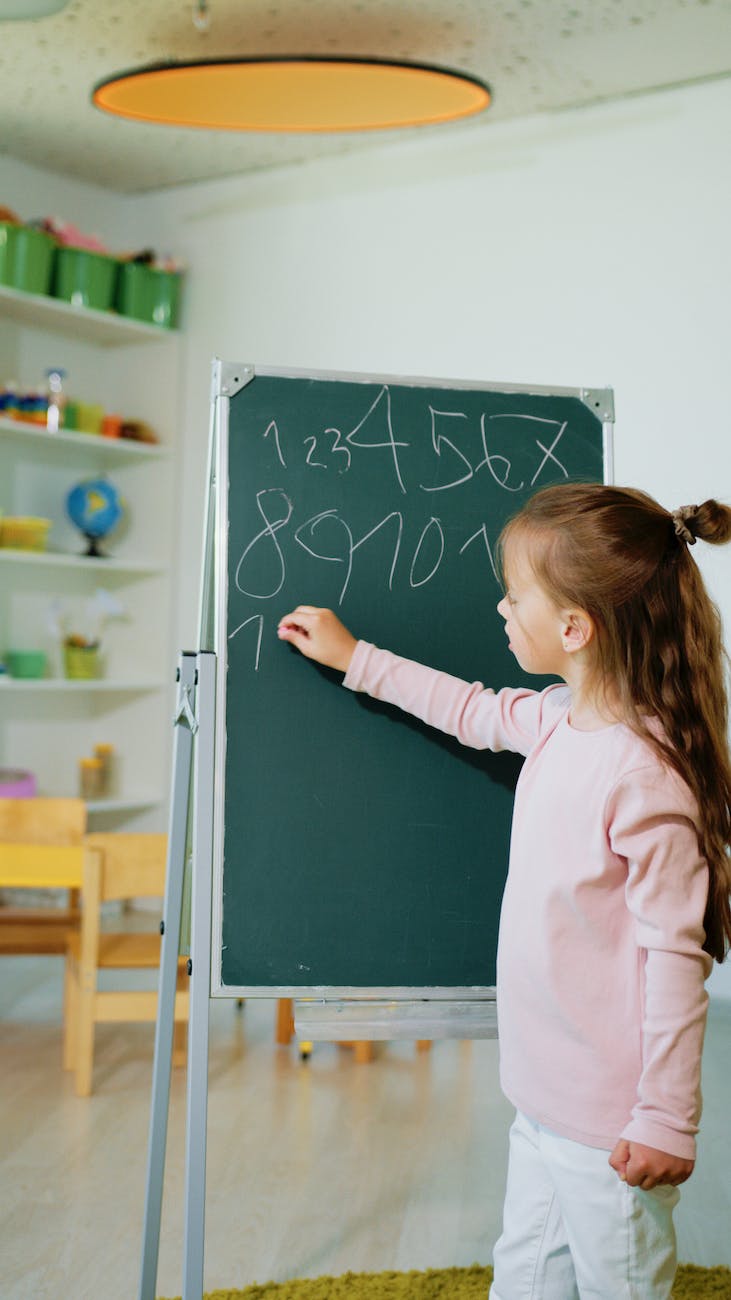
a kid writing numbers on a blackboard
Photo by Artem Podrez on Pexels.com

Checking In

woman sitting at a table writing in a notebook
Photo by Marcus Aurelius on Pexels.com

We are a little over a year in to this global pandemic.

How are you?

How is your family?

It hasn’t been easy for anyone, everyone has had to chart new territory, find a new normal and learn a new way of juggling everything.

Anyone who says it was easy would be lying.

It was hard, it was scary, and it was agonizing.

I don’t know about you, but I feel like even though we still have a ways to go, we’ve made it to this point, and I am grateful.

I’d like to talk about the things I have learned/ discovered as an occupational therapist over the last year and some ideas for moving forward.

Here goes.

Things I Have Learned

woman sitting on the floor holding up a picture of a light blub
Photo by Andrea Piacquadio on Pexels.com

1.Kids are survivors. They made it through just as we did.

2. EVERYONE is “behind”. I keep seeing news stories talking about the “year lost” when it comes to education and learning. Hello? We are ALL behind, and I don’t even think kids are “behind”. I think they adjusted and survived, just like the rest of us. Teaching and learning wasn’t ideal for anyone so we are moving forward from similar places.

3. Number 2 being said, the light shining on educational disparities is much brighter due to this pandemic. I have seen the disparities first hand since I became an occupational therapist almost 20 years ago, and with the glaring spotlight on the disparities now, I am hopeful real change will come about.

4. Occupational therapy is a key and critical service in times like these. I often think people forget the power of occupational therapists. There is so much we can do!

5. Mental health MUST be a priority for kids and adults a like. This was a really hard year. We all acknowledge it, but we MUST do something about it. Just because kids are resilient, doesn’t mean they don’t need help. There is no way anyone came out of the last year unaffected by this global pandemic. We really need to pay attention, step up, and make sure there’s help.

A Path Forward

an empty road heading into the mountains
Photo by Sebastian Palomino on Pexels.com

Ideas and Suggestions for Moving Forward

Here are some ideas and suggestions about how to move forward.

1.Prioritize working with our kids on where they are, not on trying to “catch them up”.

2. Utilize occupational therapist to address a variety of needs, we are here to help.

3. Address the mental health of students (and over the long term).

4. Don’t just acknowledge and talk about educational disparities, take action and do something about it. Fund schools, build a better technology infrastructure, rethink programs that are not working, pay teachers higher wages.

5. Be kind. We’ve all done the best we can. This is a once in a lifetime global pandemic that no one knew/knows how to navigate.

Lastly, keep wearing your mask, social distance and wash your hands.

Until next time,

Seating Options for Remote Learning

a black woman sitting on a chair looking at her phone
Photo by Ketut Subiyanto on Pexels.com

Greetings!

I was trying to think of a fancy or catchy title for today’s post, but as you will see I didn’t think of one!

Since remote learning began, I’ve had several parents, teachers and students ask me about various seating options for remote learning.

Let’s face it, being stuck behind a computer all day is taxing.

More so for kids who are programmed to be moving, running, jumping, and climbing, not sitting.

I know a dynamic teacher who pre-Covid, had a fabulous classroom full of “flexible seating”.

It was an occupational therapist’s dream come true.

There were options for every student, and it was an occupational therapist dream come true.

While Covid has hindered that in classrooms, flexible seating is an option for home.

Here are my top 10 favorite seating options.

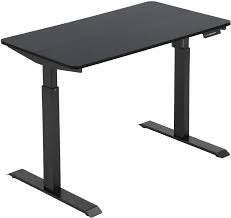
  1. Standing-why do we think kids should always be seated to do work? What’s wrong with standing up and working? An adjustable desk can be great for switching between standing and sitting.
Standing Desk Converter Electric Height Adjustable Computer Desk 47.2  inches Home Office Writing Computer Workstation PC Simple Sit-stand Large  Working Area Modern Student Girl Kids Study Desk ,Brown - Walmart.com -  Walmart.com

2. Laying down-again, why do we think kids should always be seated? Laying on the floor propped up on your elbows can be a great way to work.

Close up of Diverse Kids Stock Footage Video (100% Royalty-free) 1028669642  | Shutterstock

3. Ball chair-One of my favorites, ball chairs can provide a little bit of movement while still staying seated.

Amazon.com: Gaiam Classic Balance Ball Chair – Exercise Stability Yoga Ball  Premium Ergonomic Chair for Home and Office Desk with Air Pump, Exercise  Guide and Satisfaction Guarantee, Charcoal: Sports & Outdoors

4. Rocking chair-as we all know from our days as infants, rocking chairs can be soothing and help focus and attention. They make child size rocking chairs which are perfect for students.

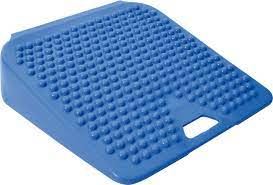
5. Sit and move cushions-just as they sound, sit and move cushions provide a little movement when you are sitting, not as much as a ball chair which might be too much for some kids.

Amazon.com: Gymnic Movin' Sit Jr. Inflatable Seat Cushion, Blue, 10 L X 10  W in - 8909: Industrial & Scientific

6. A stool-A stool is good for those kids who need more movement than a sit and move cushion, but less than a ball chair.

7. Kids desk chair-these are great for providing a little bit of movement by swiveling side to side or rolling.

8. Bean bag chair-these are great if you are snuggling up with a good book or aren’t doing any paperwork but just listening.

9. Swing/cocoon/pod chair- if you want to go all out, these can be a great way to provide a little movement (and fun!).

10. A regular good old fashioned chair- remember, flexible seating will not work for every student. Sometimes what’s tried and true is best.

Amazon.com: Lifetime 80472 Kids Stacking Chair (4 Pack), Glacier Blue:  Garden & Outdoor

To answer the question, “where can I buy these?”, there are a variety of places that will have flexible seating options for purchase, Amazon, Target and Walmart will have some options.

You can also search any of the chairs above and find many different purchasing options.

Oh! And before I forget, all of these options are great for adults too!

Until next time!

Spring Activities!

a baby chick in the green grass
Photo by Pixabay on Pexels.com

Happy Spring!

I don’t know about you but I am sure glad to see Spring!

Although we have a long way to go, I feel like we made it, and I love that Spring is a time for renewal!

It also allows us to emerge from our homes and get outside!

I am frequently asked by both parents and teachers for activities to help develop skills.

I believe skills can be developed in a variety of ways and learning doesn’t only occur behind a desk.

Spring is the perfect time to shake things up and work on skill development in fun and playful ways.

And let’s remember, kids “occupation” is to play so it’s a win win!

Here are few fun activities for the Spring!

  1. Go outside! (If you’ve read any of my other blog posts, you know I highly value the outdoors!) – there is so much to see and do outside! Don’t make an agenda, just see where the experience takes you!
  2. Nature crafts-go on a nature scavenger hunt looking for things you can use to create a picture or other art project. A little bit of grass, a few rocks or shells, or even some dirt can make for wonderful creations! (shhhh-your child will be working on their fine motor skills without even knowing it!).
  3. Outdoor obstacle course– use things in nature or your own outdoor equipment, and create an obstacle course. Jump over sticks or rocks, roll down a grassy hill, jump up and see if you can catch a cloud! (shhhh-your child will be working on their spatial awareness, gross motor and coordination skills without even knowing it!).
  4. “Recess” games-four square, hopscotch, tag, hula hoops, jacks or marbles. (shhhh-your child will be working on eye hand coordination, fine and gross motor and visual spatial skills without even known it!)
  5. Ball games– play catch, try to hit a target, play hot potato, kick a ball. Vary the size of the ball starting with large ball and then switching to a smaller ball. (shhh-your child will be working on gross motor and visual motor skills without even knowing it!).
  6. Sky writing– lay on your back and practice writing/drawing with your index finger in the sky. You can write letters, words, or draw a picture! (shhh-your child will be working on fine and visual motor skills without even knowing it!).
boy with arms behind head eyes closed laying in the grass
Photo by Andrea Piacquadio on Pexels.com

Wishing you a fun filled Spring!

Until next time!

child and parent balancing on a log both wearing rainboots
Photo by Alexandr Podvalny on Pexels.com