

When parents think about preparing their children for school success, structured activities like reading practice, math worksheets, or organized sports often come to mind.
But one of the most powerful ways to support a child’s brain development is also the simplest: free play.
Free play—unstructured, child-led activity without strict rules or adult direction—gives kids space to explore, imagine, and solve problems.
More than just fun, free play is essential for building executive function skills, the mental processes that help children plan, focus, remember instructions, and regulate emotions.
In this post, we’ll explore what executive function is, why it matters, and how free play develops these critical life skills.
What Are Executive Function Skills?
Executive function refers to a set of mental skills that act like the brain’s “air traffic control system. This includes:
- Working Memory – The ability to hold information in your mind and use it to complete a task, like remembering multi-step directions or recalling facts while solving a problem.
- Inhibitory Control (Impulse Control) – The skill of pausing before acting, resisting distractions, and choosing thoughtful responses instead of automatic reactions.
- Cognitive Flexibility – The capacity to shift perspectives, adapt to changes, and find new ways to solve problems when plans don’t work out.
- Emotional Control – The ability to manage strong feelings, recover from setbacks, and stay calm enough to make good decisions even when upset.
- Planning and Organization – The skill of setting goals, making a plan to reach them, and keeping materials or tasks in order to stay on track.
- Task Initiation – The ability to get started on tasks independently, even when they feel challenging, boring, or overwhelming.
- Self-Monitoring – The skill of checking in with yourself to see if you’re on track, noticing mistakes, and adjusting your approach as needed.
Together, these skills are essential for learning, social relationships, problem-solving, and independence.
Strong executive function is linked to success in academics, career readiness, and emotional well-being.

Why Free Play Matters for Executive Function
Free play is uniquely powerful because it is child-directed, imaginative, and flexible.
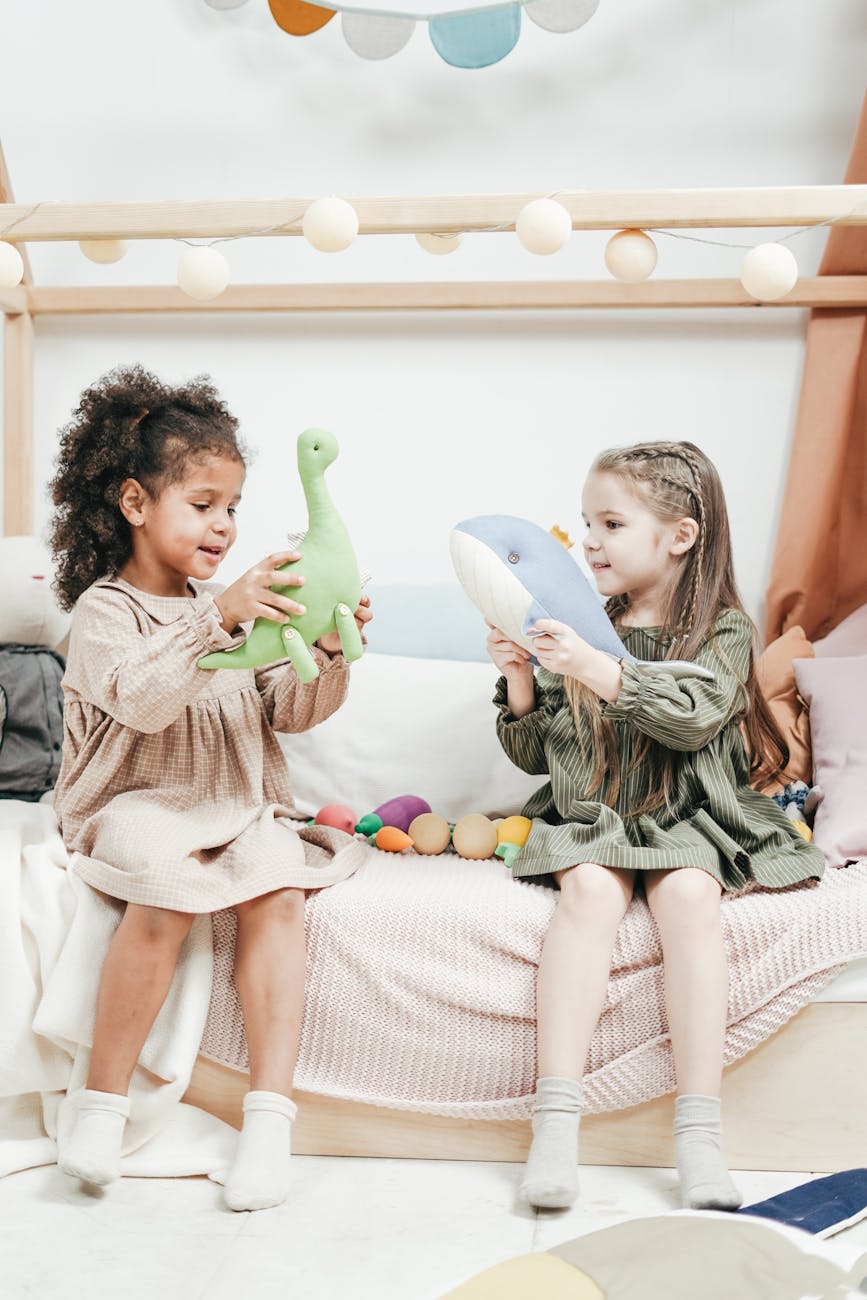
When kids are free to invent games, explore nature, or play pretend with friends, they naturally practice the very skills that executive function relies on.
Unlike structured activities with adult-led rules, free play gives children ownership of decisions, problem-solving, and self-regulation.
How Free Play Builds Executive Function Skills
1. Strengthening Working Memory
In free play, children constantly hold information in mind: the storyline of their pretend game, the “rules” of an imaginary world, or the steps needed to build a fort.
For example:
- While playing “restaurant,” a child remembers the order they just “took” from a sibling.
- While building with blocks, they keep their design plan in mind as they add each piece.
These playful experiences exercise working memory, which is later needed for tasks like following multi-step directions or remembering math facts.
2. Developing Cognitive Flexibility
Free play often involves shifting ideas and adapting when things don’t go as planned.
If a fort collapses, children must problem-solve and adjust their building strategy.
If a pretend game changes direction, they have to adapt their role.
This flexibility prepares children to handle unexpected changes in real life—like a change in classroom routine or learning a new concept that challenges their previous understanding.
3. Practicing Inhibitory Control
In free play, kids practice self-control in natural, meaningful ways.
A child may want to grab a toy, but they learn to wait for their turn to keep the game going.
In pretend scenarios, they might resist “breaking character” to stay immersed in the story.
Over time, these small acts of impulse control strengthen inhibitory control, which is critical for staying focused in school, managing emotions, and making thoughtful decisions.
4. Building Social and Emotional Regulation
When children engage in group play, they navigate disagreements, take others’ perspectives, and solve conflicts.
For example, deciding who gets to be the “teacher” in a pretend classroom requires negotiation and compromise.
These moments of social problem-solving build both emotional regulation and executive function skills, teaching children how to manage frustration, adapt their ideas, and cooperate with others.
The Long-Term Benefits of Free Play
Research shows that children who have strong executive function skills are more likely to succeed academically and socially.
Free play nurtures these skills in a natural, enjoyable way, giving children the foundation for:
- Better focus and attention in school.
- Stronger problem-solving abilities.
- Healthier relationships with peers.
- Greater independence and self-confidence.
The benefits extend into adulthood, supporting career success, emotional resilience, and the ability to manage life’s challenges.
Practical Ways to Encourage Free Play
Parents and educators can foster free play by creating opportunities and stepping back to let children take the lead. Here are some simple strategies:
- Provide open-ended materials: Blocks, cardboard boxes, art supplies, and dress-up clothes spark imagination.
- Make time for unstructured play: Balance scheduled activities with downtime where kids can direct their own fun.
- Encourage outdoor exploration: Nature play supports creativity, problem-solving, and sensory regulation.
- Limit screen time: Too much structured digital entertainment can crowd out opportunities for imaginative play.
- Resist over-directing: Offer safety and guidance but allow children to make choices, solve problems, and negotiate with peers.
Final Thoughts
Free play is far more than just “kids being kids.”
It’s a powerful tool for building executive function—the brain skills that shape learning, relationships, and success throughout life.
By giving children the time, space, and freedom to explore, we allow them to develop focus, flexibility, and self-control in joyful, meaningful ways.
So the next time you see your child lost in pretend play, building a fort, or inventing a game with friends, remember: they’re not just playing.
They’re building the foundation for a lifetime of growth and resilience.
Call to Action
Understanding how free play builds executive function skills is the first step—now let’s put them into practice!
If you’d like strategies to help your child strengthen these skills at home or in the classroom, reach out today and let’s build a plan together.
 SuperKids Pediatric Consulting Services